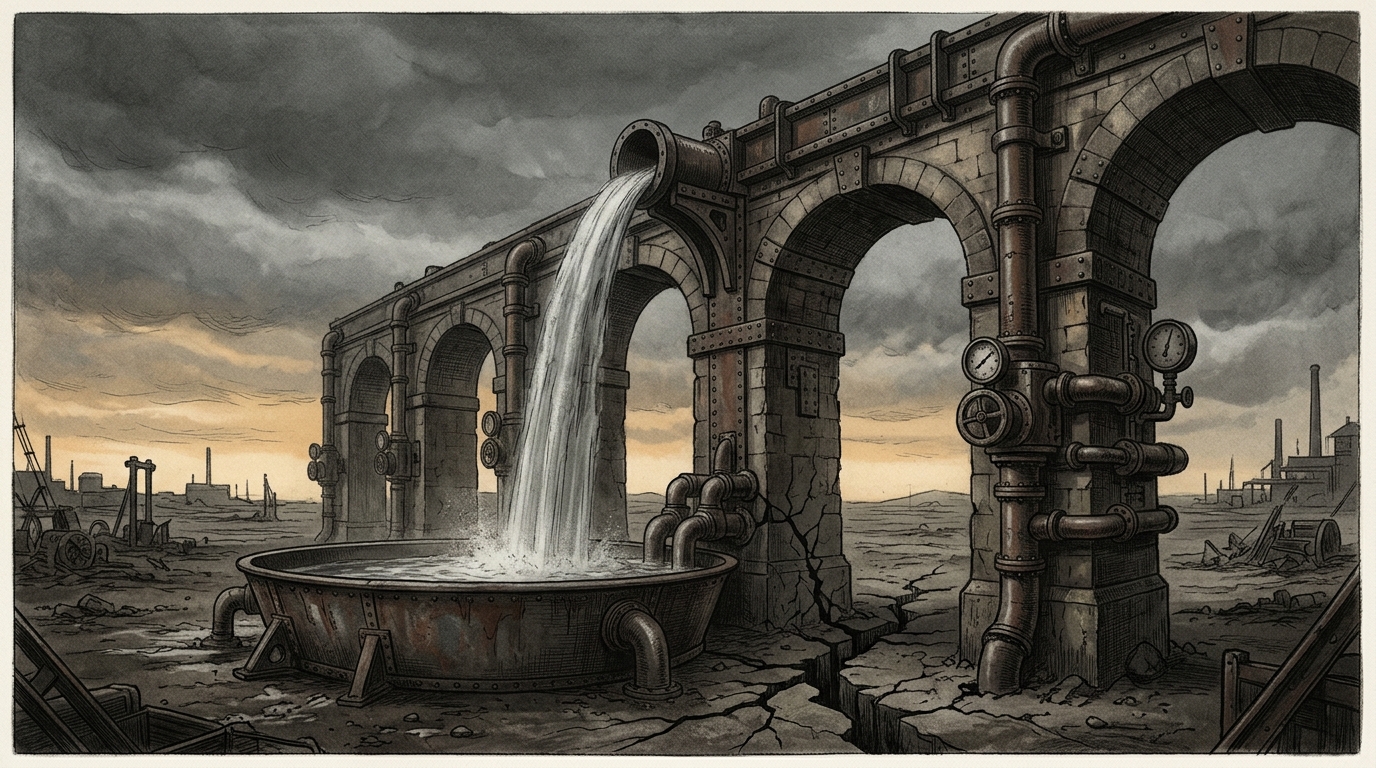
With the development of interest-bearing capital and the credit system, all capital seems to double itself, and sometimes treble itself, by the various modes in which the same capital, or perhaps even the same claim on a debt, appears in different forms in different hands.
Karl Marx, Capital, Volume III, Chapter 29
Three Filings in Five Days
May 13, 2026. The Jen-Hsun and Lori Huang Foundation discloses it has purchased $108.3 million of cloud computing capacity from CoreWeave and donated it to universities and nonprofit research institutes. NVIDIA, in the same filing, pledges free engineering services to selected grant recipients.
May 14, 2026. The Office of Government Ethics releases two disclosure filings showing the President of the United States executed 3,642 stock transactions in the first quarter of 2026, between $220 million and $750 million in cumulative value, including 15 separate NVIDIA transactions and at least seven Palantir purchases in March alone. Eric Trump, asked about the holdings, claims the family assets sit in a blind trust invested in broad market indexes. The filing contradicts him on its face.
May 18, 2026. Steve Burke of Gamers Nexus publishes a video titled Yes, This All Seems Very Legitimate. The video walks the viewer through NVIDIA’s $2 billion January equity check into CoreWeave at $87.20 per share, the $6.3 billion unsold-capacity backstop signed last year guaranteeing NVIDIA will purchase any CoreWeave compute that goes unsold through 2032, and the Huang Foundation gift as the philanthropic tier of the same loop. Burke also notes CoreWeave’s origins as Atlantic Crypto, a New Jersey ethereum-mining operation that pivoted in 2019 when the crypto winter rendered its hardware idle. He notes Huang’s increasingly hostile press posture in recent interviews.
Three filings in five days. They describe one operation.
The Mechanism
State the loop in its reduced form.
NVIDIA designs the only logic chip that matters for frontier AI training. Gross margin on data center GPUs in the most recent quarter exceeds seventy percent. The surplus generated by that monopoly position cannot be productively reinvested at the rate it accumulates. The choice is to return capital to shareholders or to deploy it into customer demand for its own product. NVIDIA has chosen the second.
It has invested $2 billion directly into CoreWeave, becoming the second-largest shareholder at the time of the deal. It has signed a $6.3 billion floor under CoreWeave’s capacity, guaranteeing that any compute CoreWeave cannot rent to third parties, NVIDIA itself will buy. It has put $2.1 billion into IREN, structurally similar. It holds equity in OpenAI. Each of these counterparties uses the capital NVIDIA provides, plus debt raised against future contracts NVIDIA effectively underwrites, to buy NVIDIA GPUs.
The customer is the supplier. The supplier is the lender. The lender is the customer.
This is not fraud. Every filing is in order. The booked revenue is real revenue. The point is structural. A market in which the dominant supplier must guarantee demand for its second-largest customer’s capacity has, by definition, exhausted its independent price discovery. Marx’s formulation in Capital III is exact. The same capital appears in different forms in different hands. NVIDIA’s surplus becomes CoreWeave’s capex becomes NVIDIA’s revenue becomes NVIDIA’s surplus again. Each iteration of the loop generates a fresh claim, a fresh asset on a fresh balance sheet, a fresh narrative for the analyst note.
The Huang Foundation gift is the third tier of the same loop, executed through the personal-wealth vehicle rather than the corporate balance sheet.
The Foundation
The press release frames the $108.3 million as philanthropy. Read it again.
The Huang Foundation, a private 501(c)(3) seeded with appreciated NVDA stock, deducted at fair market value against personal income with capital gains avoided on the transferred shares, has committed cash to CoreWeave for compute time. CoreWeave bills the foundation at retail. The compute runs on NVIDIA GPUs purchased partly with NVIDIA’s own $2 billion January equity check. NVIDIA, in the same filing, offers free engineering services to selected recipients. The recipients are PhD students, postdocs, and faculty at universities whose research budgets cannot otherwise access frontier compute.
Translate.
The foundation is a customer-acquisition channel. It buys compute on a vendor that NVIDIA controls. It hands that compute to the population that will spend the next decade writing the papers, training the models, and founding the labs that define the industry. NVIDIA engineers will sit beside those researchers as they port their workloads onto CUDA and CoreWeave’s stack. By the time those researchers leave academia for industry, government, or their own startups, CUDA fluency and CoreWeave familiarity will be the default substrate of their professional muscle memory. The flywheel is not the gift. The flywheel is the engineers.
Naming this as philanthropy is a category error. It is a sales channel with a tax deduction attached.
The deeper move is Gramscian. Hegemony is the production of consent by the institutions that appear most independent of the interest being served. Free compute for universities does not merely capture customers. It captures the field that produces the future critics of the field. Tomorrow’s published critique of AI infrastructure will be written, in part, by researchers whose careers were built on free CoreWeave credits and free NVIDIA engineering help. The critique will be more sophisticated for it. It will also be structurally indebted to the apparatus it critiques. This is how monopoly secures itself in the cultural register. Not by suppressing dissent, but by underwriting the conditions under which dissent is articulated.
Cornell’s English department once depended on Carnegie steel money. The recipients did not produce a generation of anti-steel pamphlets.
The Position of the Sovereign
The OGE filings cannot be reconciled with Eric Trump’s claim. Quote the principals against themselves.
Eric Trump, May 2026: the family assets sit in a blind trust invested in broad market indexes.
OGE filing, May 14, 2026: 3,642 individual trades, 2,345 purchases and 1,296 sales, between $220 million and $750 million, including 15 separate NVIDIA transactions and at least seven Palantir purchases in March.
Reconcile those two sentences.
The Executive holds a personally significant long position in the two equities most exposed to the policy levers the Executive controls. Export-control treatment of NVIDIA’s China-bound chip derivatives. Federal procurement preference for Palantir on defense, immigration, and intelligence contracts. Antitrust forbearance across the AI stack. The standard analytical move in realpolitik is to ask what the actor needs to survive and what constraints predate the actor’s office. Both reduce to the same answer here. The Executive needs NVDA and PLTR to keep rising. The standard checks on that incentive (the OGE, the SEC, the DOJ Public Integrity Section) have all been hollowed in advance.
This is not a conflict of interest in the procedural sense. The procedural sense presupposes a body capable of adjudicating the conflict. There is no such body. What remains is the bare structural fact. The state, and the principal shareholders of the state’s most strategically protected industry, are now the same set of people, with the holdings disclosed in writing and the press secretary instructed to deny them in public.
A bubble persists longer when the marginal regulator owns the bag.
The Atlantic Crypto Inheritance
The point about CoreWeave’s origins is not nostalgia. It is genealogy.
CoreWeave was incorporated in 2017 as Atlantic Crypto by three commodities traders (Michael Intrator, Brian Venturo, Brannin McBee) and an engineer (Peter Salanki). Intrator ran a natural-gas hedge fund. Venturo traded energy and emissions portfolios at the same firm. The founding thesis was that ethereum mining was a commodities arbitrage problem: cheap electricity in, fungible tokens out. The 2018 ethereum crash made the mining unprofitable. The same GPUs were repurposed in 2019 for cloud rendering and then, after ChatGPT, for AI training.
The founders did not become infrastructure engineers between 2019 and 2026. They remained what they were. CoreWeave’s business model is rent extraction on a capacity bottleneck. The bottleneck is presently controlled by NVIDIA’s GPU allocation rules. CoreWeave’s roughly $21 billion of debt is collateralized by hardware whose useful life depreciates on NVIDIA’s product roadmap. If NVIDIA’s preferential Rubin-generation allocation goes elsewhere next cycle, CoreWeave’s unit economics invert.
The marketing language (“the essential cloud for AI”) describes a moat that does not exist independent of the supplier. The actual moat is supplier preference. The actual moat is contingent on the supplier remaining a shareholder.
A rent extractor with $21 billion in debt and a single supplier is a financial structure, not an industrial firm. Calling it the latter is the operative ideological move.
Why “Bubble” Is the Wrong Word
The word bubble invites the reader to wait for the burst. The burst metaphor is wrong because it implies the underlying demand is fictitious. The demand is not fictitious. Meta has signed roughly $35 billion in combined commitments to CoreWeave. OpenAI has signed $22.4 billion. Anthropic has signed a multi-year deal closed in April. Microsoft is in. These are real customers running real inference at real margins.
The risk is not zero demand. The risk is mark-to-market on circular flows masking the rate at which incremental capital is generating incremental return. A bubble bursts because the underlying asset turns out to have been worth nothing. The closed loop does not work that way. It degrades when the incremental revenue per dollar of capex falls below the cost of capital, at which point the loop continues to function but stops being legible as growth. The principals know this. The circle of vendor financing is precisely the mechanism that delays the moment at which the market discovers it.
What this calls for is not a bubble theory but a theory of state-subsidized monopoly capital in its terminal phase. The technical name in the Marxist tradition is finance capital in its imperialist register. The contemporary euphemism is industrial policy.
Industrial Policy by Proxy
The buildout is not a private bubble inflated by private actors. It is the closest thing the United States has to an active industrial policy.
The CHIPS and Science Act of 2022, signed by Biden, allocated $52 billion in subsidies to domestic semiconductor manufacturing, with Intel, TSMC’s Arizona fabs, and Samsung as the headline recipients. The Trump administration that took office in January 2025 has not repudiated the policy. It has extended it. Export controls on H20 derivatives loosened to advantage NVIDIA’s China revenue. Federal procurement preference for Palantir tightened across DHS and DOD. Regulatory forbearance for the hyperscaler/neocloud stack maintained.
The continuity is the policy. The party labels are decorative.
The strategic frame is bipartisan and explicit in the unclassified strategy documents. The People’s Republic of China is on the threshold of indigenous logic at competitive nodes. Huawei has shipped Ascend at scale. SMIC is delivering the equivalent of 7nm. The U.S. response is to subsidize NVIDIA’s loop because the alternative is conceding the frontier. The Huang Foundation’s academic capture supports the same goal: keep the next generation of AI researchers trained in the American stack, locked into CUDA, embedded in CoreWeave.
The circular financing is therefore not a bug that regulators will eventually correct. It is a feature underwritten by the national-security state. The implicit guarantee runs in two directions. The Treasury will not let NVIDIA fail because NVIDIA is the industrial base of the AI buildout. NVIDIA will not let CoreWeave fail because CoreWeave is the customer of last resort that absorbs the supply NVIDIA must keep producing to maintain its lead.
The honest term for this configuration is state capitalism with bipartisan ideological cover.
The Affect
Watch Huang in the most recent interviews. The leather jacket is unchanged. The cadence is not. Where the 2023 Huang answered hostile questions with a managed founder grin, the 2026 Huang interrupts, dismisses, audibly losing patience with interviewers doing nothing more than the work any competent business journalist would do.
The affect is not a personal failing. It is a tell.
The founder-genius cultural product is a managed asset. Its function is to translate monopoly rent into the legible form of “visionary technology.” The persona’s effectiveness depends on its credibility. When the questions converge on the structure the persona was designed to obscure, the persona cannot answer without abandoning its frame. Anger is the most legible compromise. The interviewer becomes the problem. The structural question goes unanswered. The cost is the slow erosion of the cultural product.
Altman exhibits the same pattern in recent appearances. The Andreessen and Thiel public posture has rotated toward open hostility against the press generally. The compressed schedule of founder-as-visionary collapses runs roughly: hagiography, the first hard question, defensiveness, hostility, then either the burn or the regulatory bailout. The trajectory in front of Huang is set.
Gamers Nexus as Witness
Three things to credit in Burke’s video, before noting what it cannot do.
He has done the work. The Huang Foundation chapter, the Atlantic Crypto chapter, the Trump trades chapter, the backstop chapter. Each is sourced to filings. The reader who follows along has the same documents Burke has. The video’s strength is forensic, not rhetorical.
He has named the genre. Yes, This All Seems Very Legitimate is not commentary. It is the structural reveal. The press release describes a charitable gift. The structure describes a customer-acquisition loop with a tax deduction. Burke’s title supplies the gap.
He has chosen the right register. Gamers Nexus is a hardware reviewer that broke out into financial coverage because its existing audience was the audience most directly affected by GPU price distortion. The audience is unusually technical, unusually distrustful of the press release as genre, and large enough to matter. Burke is doing work the financial press structurally cannot do, because the financial press is dependent on access to the principals.
What Burke cannot do from his position is name the configuration as industrial policy and finance capital. The category names are not in his vocabulary. He calls it a bubble because that is the vernacular available. The vernacular is what limits the conclusion.
The thing Burke is describing is not a private bubble. It is the late-imperial form of American industrial policy, executed through a vendor-financing loop, secured by a charitable vehicle that doubles as a customer-acquisition channel, and politically underwritten by an Executive whose personal portfolio is long the principal counterparties.
Closing
The operation continues as long as three conditions hold.
One. NVIDIA’s gross margin on data center GPUs remains structurally above the cost of capital. As of Q1 2026 this holds. The conditions under which it would not hold are TSMC supply expansion to competitors, Chinese indigenous logic at competitive nodes, or a frontier-model demand inflection downward. All three are visible on the horizon. None is operative.
Two. The implicit Treasury guarantee on the AI industrial base remains bipartisan. As of the May 14 OGE filings, the guarantee is now also personal. The Executive’s portfolio is the most binding form the guarantee has yet taken.
Three. The cultural product of “AI as inevitable progress, led by visionary founders” remains intact enough to defer scrutiny. The affect of the principals in May 2026 indicates the product is degrading. Burke’s video is one of the degraders.
The structure ends when one of the three conditions fails. The first will fail when China’s domestic logic clears 5nm at scale, currently projected for 2028 to 2030. The second will fail when the Executive is replaced or the holdings shift, neither imminent. The third has begun to fail and will accelerate.
The honest reading of the May 13 to May 18, 2026 filing sequence is that the principals know all of this and are now operating with the calendar in front of them. The foundation gift, the trades, the public hostility from the founders. These are not the moves of a sector at the beginning of its rerating. They are the moves of a sector that has priced its political and cultural insurance and is now spending it.
Name the thing.